Table of Contents
ToggleIf you heat your home with wood or just have a stockpile of logs to process, splitting by hand gets old fast. The Dirty Hand Tools log splitter sits squarely in the sweet spot for homeowners: affordable enough not to break the budget, powerful enough to handle a season’s worth of firewood without bogging down, and simple enough that you won’t need a mechanic just to change the oil. This review covers what you’re actually getting, the real specs, what it does well, where it has limits, and whether it makes sense for your property and workload.
Key Takeaways
- A Dirty Hand Tools log splitter delivers 26–30 tons of splitting force from a 7–10 HP engine, making it ideal for homeowners processing 2–6 cords of seasonal firewood affordably without commercial equipment costs.
- The horizontal ram-and-wedge design handles logs up to 20 inches long and 10 inches in diameter efficiently, with one operator capable of processing 3–4 cords in a single 8-hour day on prepared material.
- Dirty Hand Tools splitters require minimal maintenance—oil changes every 50 hours, seasonal hydraulic fluid checks, and annual spark plug replacement—making them accessible for owners comfortable with basic small-engine care.
- Performance varies by wood type: seasoned softwoods (pine, fir, aspen) split cleanly in 8–12 seconds per cycle, while harder or green wood requires 15–20 seconds and may need repositioning or a second pass.
- A Dirty Hand Tools log splitter isn’t suited for commercial users, properties lacking secure storage, or consistently oversized hardwoods—those applications require larger, more robust equipment or commercial alternatives.
What Is the Dirty Hand Tools Log Splitter?
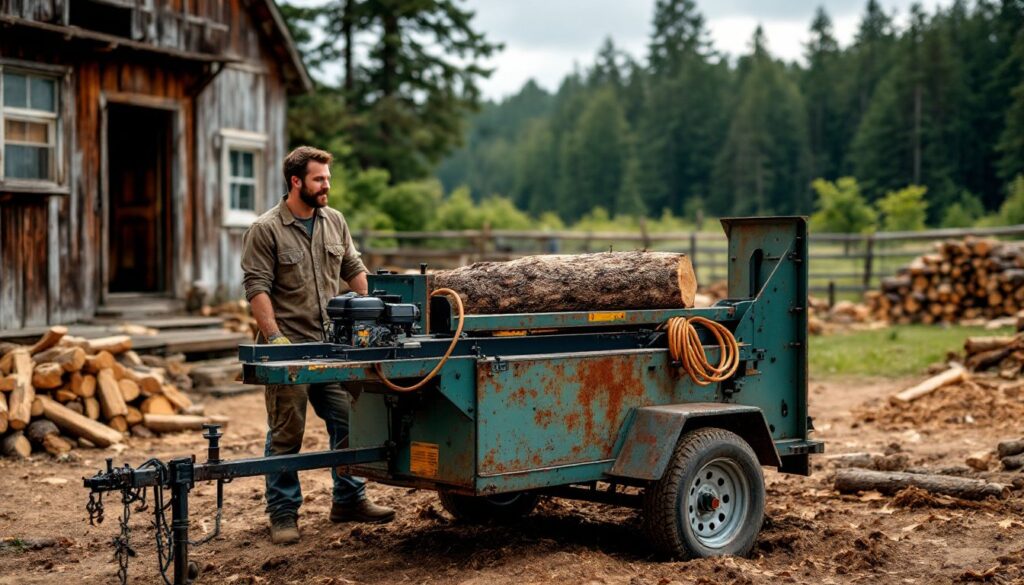
Dirty Hand Tools manufactures budget-friendly equipment aimed squarely at the homeowner market. Their log splitter is a horizontal, trailer-mounted machine powered by a small-displacement gasoline engine. It’s not a commercial-grade beast, it won’t spend ten hours a day at a sawmill, but it’s built to handle seasonal residential firewood processing without fuss.
The machine uses a ram-and-wedge design: hydraulic pressure drives a steel wedge through a log along a horizontal path. You feed the log, engage the hydraulic ram, and let physics do the work. Most units in this class split logs up to 20 inches in length and handle diameters up to about 10 inches, though performance tapers with harder woods and larger diameters. The footprint is compact enough to tow behind a standard pickup truck, and setup is minimal, park it, level it, refuel, and go.
Key Features and Specifications
Engine Power and Splitting Force
Dirty Hand Tools log splitters typically come with a 7 to 10-horsepower single-cylinder gasoline engine. That translates to roughly 26 to 30 tons of splitting force, which is adequate for softwoods and moderately seasoned hardwoods. A ton of splitting force equals 2,000 pounds of hydraulic pressure: you’ll see specs listed as “X tons” on most product pages.
For reference, 26 tons handles pine, fir, and aspen cleanly. Hardwoods like oak, maple, and hickory require either seasoned material (dried one to two years) or a machine at the upper end of the power range. If you’re splitting green wood (freshly felled, high moisture content), expect slower cycle times and more stuck wedges. A two-handed wedge puller or a second pass often frees up jams without drama.
Design and Build Quality
The frame is welded steel tubing, painted to resist rust but not flawless, touch up any dings with spray paint before they surface-oxidize. The wedge itself is hardened steel and replaceable: a dull wedge is the leading cause of slow splitting and stuck logs. The hydraulic hose runs along the frame and is protected from branch snags by routing along the underside.
Wheel quality varies by model year and retailer sourcing. Check bearings during the first season for play: some units ship with slightly loose axle nuts. Tightening them (typically a 17 mm wrench) takes ten minutes and prevents premature wear. The hitch is a standard 2-inch ball receiver, fitting most truck and ATV hitches.
Performance and Splitting Capability
In real-world use on a homestead, a 26-ton Dirty Hand Tools splitter cycles through logs at a steady clip. A single cycle, wedge in, pressure applied, log splits, wedge retracts, takes roughly 8 to 12 seconds on ideal material (straight-grained, seasoned softwood). Knottier or unseasoned logs take 15 to 20 seconds per cycle.
On a decent day with prepared firewood, one operator can process three to four cords in eight hours. A cord is 128 cubic feet (a stack 4 feet tall, 4 feet deep, 8 feet long), so expect to move 24 to 32 linear feet of stacked wood. That’s respectable for a single person on a machine that costs a fraction of commercial equipment.
Where limits show up: logs larger than 10 inches in diameter or harder than straight-grained oak often need a second push or repositioning. Knots and grain irregularities can deflect the wedge, requiring you to flip the log and try again. This isn’t a flaw, it’s physics. Even commercial splitters face the same constraint: they just have more raw tonnage to overcome it brute-force. The real advantage of a homeowner splitter is that you can step back, assess, and adjust rather than feeding endless material through a stationary chute.
Maintenance and Durability Considerations
Engine maintenance is straightforward and identical to any small lawn equipment. Change oil every 50 hours (roughly a season of weekend work), use a fresh spark plug annually, and clean the air filter when dusty. Most failures trace to neglected air filters: a clogged filter starves the carburetor and causes hard starts or stalling under load.
The hydraulic system is sealed and requires minimal intervention. Check hydraulic fluid level at the sight glass on the reservoir before each use: top up with ISO 46 hydraulic fluid if low (not engine oil, wrong viscosity). Hoses degrade in UV light over time: inspect them seasonally for cracks or weeping. A small weep from a hose connection is often just a loose fitting, a half-turn with the right wrench often stops it. A full hose replacement runs $50 to $150 depending on length and routing.
Dirt and moisture in the hydraulic system cause premature wear. After each season, drain the tank, refill with clean fluid, run the engine for a minute to circulate, then drain and refill again. This flushing takes 15 minutes and extends component life by years. Storing the machine covered, indoors if possible, prevents rust on unpainted surfaces. A tarp suffices if garage space is tight.
The wedge wears over time and will eventually need replacement, expect 500 to 1,000 cord-hours before it loses sharpness. A dull wedge increases cycle time noticeably: a replacement runs $75 to $150 depending on manufacturer and sourcing.
Is It Right for Your Home?
A Dirty Hand Tools splitter fits your property if:
- You process two to six cords annually (seasonal firewood for heating, cleanup after storms, or stockpiling for future use).
- Your budget caps out around $800 to $1,200 for the machine, plus ongoing fuel and maintenance.
- You’re comfortable with small-engine troubleshooting (spark plugs, air filters, carburetors) or have a neighbor or local repair shop you trust.
- You have a truck, ATV, or access to towing equipment.
- Your property has firewood staged near a working area, not hundreds of yards away.
It doesn’t fit if:
- You’re splitting 20+ cords per season (commercial or semi-pro users should lease or invest in a larger rig).
- You lack secure, level storage space (a machine exposed to rain and snow rots faster).
- Your logs are consistently larger than 12 inches in diameter or extremely knotty hardwoods.
- You need a fully self-contained system that doesn’t require setup or adjustment.
One practical note: owners often find a vertical splitter alternative useful for stubborn logs. Many DIYers build or purchase a simple wedge-on-a-frame setup for problem pieces rather than wrestling with the main machine. Resources like Instructables and woodworking project plans show easy builds for specialized splitting rigs.