Table of Contents
ToggleWhen you’re standing in your garage staring at a stubborn screw or facing your first plumbing repair, the right tools make all the difference between a frustrating afternoon and a completed project. Klein hand tools have been the go-to choice for electricians, plumbers, and seasoned DIYers for over 160 years, and homeowners are catching on to why. These aren’t fancy branded luxury tools, they’re built for actual work. In 2026, Klein remains one of the most reliable names in hand tools, offering the kind of precision and durability that transforms a casual weekend project into something you’re genuinely proud of.
Key Takeaways
- Klein hand tools deliver trade-grade durability and precision that outperform generic alternatives, with ergonomic design and corrosion-resistant finishes built to last generations.
- Start your collection with six essential Klein tools: Phillips and slotted screwdrivers, needle-nose and slip-joint pliers, a torpedo level, and a utility knife, then expand based on project needs.
- Klein specializes in task-specific tools engineered for professional trades like electrical and plumbing work, meaning you’re investing in tools optimized for the actual work you do.
- Proper maintenance—storing tools in dry locations, cleaning after use, and maintaining sharp cutting edges—extends Klein hand tool lifespan significantly and ensures reliable performance.
- Buying individual Klein tools rather than complete sets allows you to build a curated collection you’ll actually use, avoiding the waste of mediocre mass-market toolbox bundles.
Why Klein Hand Tools Stand Out in the DIY Market
Klein hand tools have earned their reputation through decades of real-world performance. Unlike generic big-box options, Klein designs tools specifically for the tasks professionals face every day, and those tasks don’t change much whether you’re wiring a commercial building or installing a ceiling fan at home.
The build quality is noticeable the moment you pick up a Klein screwdriver or pair of pliers. The handles are ergonomically designed to reduce hand fatigue during extended use, a detail that matters when you’re tightening dozens of fasteners. The metal components use chrome-plated or nickel-plated finishes that resist corrosion, meaning your tools stay sharp and functional year after year. Klein also engineers tolerances tightly, pliers jaws align precisely, screwdriver tips hold their shape, and everything works as intended without play or wobble.
What really sets Klein apart is their focus on specific trades. A Klein electrician’s screwdriver is engineered differently than a general-purpose one. The tips are hardened for stripping wire without slipping, and the handles are insulated for safety. Similarly, Klein’s cutting tools are heat-treated to maintain an edge longer than cheaper alternatives. This specialization means you’re paying for tools optimized for the work you actually do, not a jack-of-all-trades product that does nothing exceptionally well.
DIYers who invest in Klein tools report fewer frustrations with stripped screw heads, broken tips, or tools that don’t grip properly. When a project goes wrong, it’s rarely the tool’s fault, it’s usually operator error or inadequate prep work. That reliability builds confidence, and confidence makes projects go faster and safer.
Essential Klein Hand Tools Every Homeowner Should Own
Building a basic Klein hand tool collection doesn’t require dropping hundreds of dollars at once. Start with the essentials and expand as your projects demand. Most homeowners can handle common repairs and minor renovations with just six or seven core tools.
Screwdrivers and Precision Tools
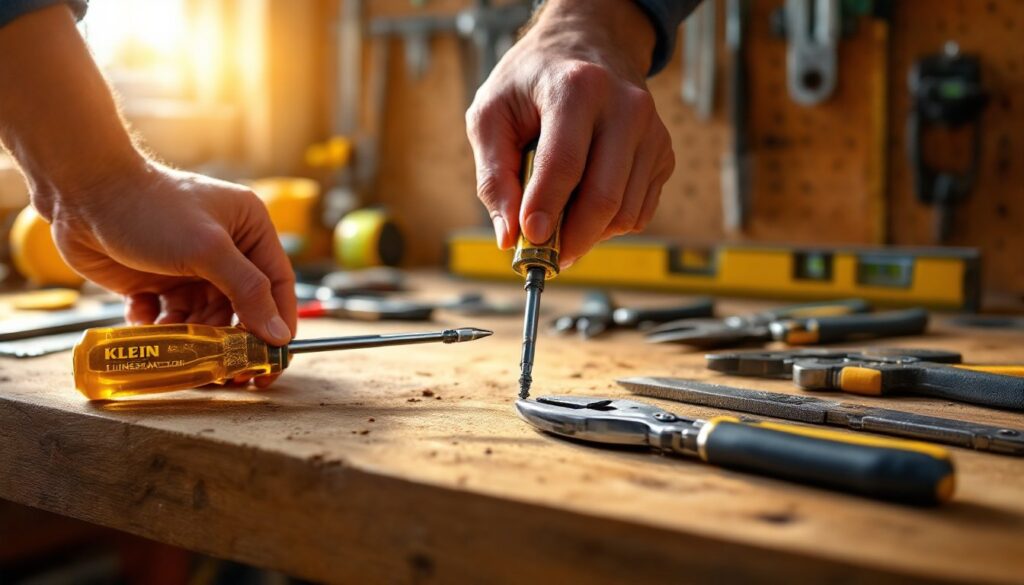
You’ll want at least two screwdrivers: a 6-inch Phillips-head and a 6-inch slotted-head (flat-head). Klein’s screwdrivers are frustration-free, the tips are precisely ground and hardened to grip screw slots without cam-out (where the driver spins out of the screw head instead of turning it). For electrical work or precision tasks, a Klein insulated screwdriver set offers protection if you accidentally contact live terminals or exposed wires. The insulation is rated to 1000 volts, so it’s legitimate safety gear, not marketing.
Adding a torpedo level rounds out the precision tools. Klein’s levels are typically 24 inches long, which is versatile enough for hanging shelves, checking door frames, or confirming that your new tile is actually level. The accuracy on a quality Klein level holds true across hundreds of uses, you won’t get creeping errors that compound over time.
When shopping for precision tools, note the difference between hobby-grade and trade-grade options. Klein sits firmly in the trade-grade category, meaning they’re built for daily use. That matters less for occasional DIYers but pays dividends if you’re tackling multiple projects per year.
Pliers and Cutting Tools
Every toolbox needs needle-nose pliers and slip-joint pliers (the classic adjustable pliers with two position settings). Klein’s designs grip securely without rounding fastener heads, and the hinge mechanism stays tight after hundreds of closures. For cutting work, a pair of Klein linesman’s pliers handles wire stripping, cutting, and gripping in one tool, this is perhaps the most versatile single tool Klein makes.
If you’re tackling drywall, trim work, or any cutting task, a utility knife with replaceable blades is non-negotiable. Klein’s utility knives accept standard blades and feature comfortable handles that won’t exhaust your grip hand during extended cutting. Replace blades often, a dull blade requires more pressure, increases slip risk, and delivers ragged cuts. A fresh blade costs cents and transforms the experience.
For fastener removal, a cat’s paw (pry bar with a forked end) is invaluable. Unlike generic pry bars, Klein’s cat’s paws have a slight taper that seats under nail heads efficiently, and the handle geometry gives you leverage without a lot of arm strain. When you’re extracting a hundred trim nails before repainting, that ergonomic detail prevents hand cramps.
Consider this collection a foundation. Once you’ve completed a few projects, you’ll identify gaps in your setup, maybe you need a ratchet screwdriver, a torpedo level with magnet, or specialized pliers for specific work. Building gradually means you’re investing in tools you actually use rather than accumulating dead weight.
Choosing the Right Klein Tools for Your Projects
Not every project needs every tool, so match your purchases to the work you’re planning. If you’re hanging drywall and painting a bedroom, prioritize a utility knife, measuring tape, and a level. If you’re rewiring outlets or installing a ceiling fixture, electrician-specific Klein screwdrivers and a non-contact voltage tester become essential. The voltage tester (while not a traditional hand tool) should be on every homeowner’s list, it prevents accidental electrocution, and Klein makes reliable models for under $30.
When comparing Klein to other brands, consider the specific tool rather than the brand as a whole. Klein excels at electrician tools, plumbing fixtures, and cutting equipment. For general-purpose work, their offerings are solid but not necessarily better than quality alternatives. Brands like Wiha and Bahco make excellent precision screwdrivers, and Stanley makes serviceable entry-level tools. The decision comes down to your expectations and budget.
Mechanical workshop tools and tools for your home workshop both emphasize investing in quality basics rather than cheap quantity. Klein aligns perfectly with that philosophy, one excellent screwdriver beats three mediocre ones every time. When buying Klein, you’re trading lower upfront cost for reliability that compounds over years of use.
For specific projects, instructables offers step-by-step tutorials that often recommend tool types. Checking a project guide before buying tools ensures you’re not overbuying or underbuying for the job. Similarly, consulting popular mechanics tool reviews helps you understand which Klein products solve real problems and which are niche items you might skip unless you’re a regular user.
One practical tip: buy individual tools rather than complete sets when starting out. Huge toolbox sets include tools you’ll never touch and often sacrifice quality to hit a price point. Building a curated collection of Klein hand tools you actually need is smarter than the spray-and-pray approach of buying everything at once.
Caring for Your Klein Hand Tools to Extend Their Lifespan
Klein hand tools are built tough, but maintenance matters. Store them in a dry location, moisture causes corrosion, even on plated metals, and tools stored in a damp garage or shed degrade faster than necessary. A simple pegboard in your workshop keeps tools visible and accessible while protecting them from humidity.
Clean tools after use, especially if you’ve been working in wet or dirty conditions. A quick wipe with a dry cloth removes sawdust and prevents buildup that can gunk up moving parts. For pliers or scissors-action tools, a light machine oil on the pivot keeps the mechanism smooth. Don’t use rust-removal products on Klein’s plated finishes, they can damage the protective coating. Mild soap and water work fine for routine cleaning.
Sharp tools are safer tools, so maintain cutting edges. Dull blades and dull plier jaws require more force, which increases slipping and injury risk. Replace utility knife blades as soon as they lose bite. For tools like snips or pliers where the cutting edge can’t be replaced, Professional sharpening services cost $10-20 per tool and extend lifespan significantly. Resources like fix this build that cover tool maintenance in detail and often recommend when to retire versus refresh tools.
Keep handles in good shape. If a handle cracks or chips, don’t ignore it, a compromised handle affects control and safety. Klein offers replacement handles for many tools, making repair more economical than replacement. Insulated handles require extra care: never submerge them, and don’t expose them to extreme heat or cold, which degrades the insulation material.
A well-maintained Klein tool outlasts its user. That’s not hyperbole, many electricians still use Klein tools passed down from mentors or family. Taking five minutes after each project to clean and store tools properly is the cheapest insurance against frustration and waste.
Conclusion
Klein hand tools represent the philosophy that quality tools are an investment, not an expense. A homeowner who owns five excellent Klein tools will complete more projects more safely than someone with fifty mediocre alternatives. Start with the essentials, screwdrivers, pliers, a level, and a utility knife, and expand as your confidence and project complexity grow. The workshop tools list concept applies perfectly here: intentionality beats accumulation. Your future self, standing in the garage ready to tackle the next project, will be grateful for tools that actually work.