Table of Contents
ToggleDeWalt FlexVolt tools have shifted how homeowners approach cordless projects. Unlike traditional 18V or 20V batteries that reach their limits on demanding tasks, FlexVolt technology delivers flexible voltage, outputting 54V when paired with dual batteries or ramping down to 20V when running solo. This adaptability means a single cordless drill can handle everything from hanging cabinets to driving lag bolts through pressure-treated lumber without plugging in a corded tool. For DIY enthusiasts tackling bigger projects without a workshop full of equipment, FlexVolt bridges the gap between compact convenience and contractor-grade power. Let’s walk through what makes these tools different, which ones belong in your garage, and how to get the most out of the battery ecosystem.
Key Takeaways
- DeWalt FlexVolt tools deliver flexible voltage—54V with dual batteries for heavy-duty tasks or 20V with a single battery for lighter work—allowing one tool to handle everything from cabinet hanging to lag bolt driving.
- FlexVolt batteries are compatible with all modern DeWalt 20V tools, simplifying your tool ecosystem by eliminating the need for separate 18V and 20V systems and multiple battery inventories.
- The FlexVolt circular saw, reciprocating saw, and drill/driver are essential for deck building, framing, and demolition work, providing contractor-grade cutting speed and torque without corded equipment or rentals.
- A dedicated FlexVolt charger returns depleted battery packs to 80% capacity in approximately 30 minutes, reducing downtime and enabling back-to-back project work with a dual-charger setup.
- Investing in at least two FlexVolt batteries at $120–$170 per pair prevents charging bottlenecks and ensures one battery is always ready while the other powers your project, maximizing efficiency on demanding DIY tasks.
What Are DeWalt FlexVolt Tools and How Do They Work
FlexVolt is DeWalt’s dual-voltage system that fundamentally changes how cordless tools operate. The battery itself is the genius: a FlexVolt battery pack (available in 5.0 Ah and 7.0 Ah capacities) detects which tool it’s installed in and adjusts voltage accordingly.
When two FlexVolt batteries are connected together in a tool’s battery bay, which works on compatible saws, impact drivers, and other heavy-duty units, the system outputs 54V, unlocking performance closer to corded equipment. Install a single battery, and it delivers 20V, making the same tool lightweight and maneuverable for lighter tasks. This isn’t just marketing language: the voltage shift actually affects motor speed and torque output in real time.
The technical advantage is runtime and cutting speed. A FlexVolt circular saw with dual 54V batteries rips through a 2×10 pressure-treated board in one pass without bogging down, something that might require battery swaps on a single 20V unit. The battery management system monitors amp draw and automatically distributes power, extending pack lifespan compared to tools that hammer a single battery with constant high current.
This flexibility also simplifies a home workshop. Instead of owning a corded miter saw and a cordless drill, a serious DIYer can standardize on FlexVolt and skip the extension cord entirely. For projects like deck framing or fence building, that cordless freedom saves setup time and eliminates tripping hazards.
The Benefits of FlexVolt Battery Technology for Homeowners
The primary benefit for homeowners is runtime without compromise. A single 20V FlexVolt battery in a drill lasts through fastening a deck’s worth of joist hangers, yet that same battery, doubled up, powers a 54V angle grinder or reciprocating saw through demolition work. No need to buy separate tool lines or maintain a battery ecosystem split between 18V and 20V systems.
Cost efficiency matters too. Homeowners investing in FlexVolt tools buy batteries once and use them across the widest range of applications. Charging speed is decent as well: a FlexVolt charger returns a depleted pack to 80% capacity in roughly 30 minutes (exact timing depends on amp rating and charger model), which means less downtime between heavy work sessions.
The power itself shouldn’t be understated. Dual 54V FlexVolt batteries deliver torque and no-load speeds that rival many corded professional tools. A FlexVolt table saw or band saw operates at speeds and cutting force that handle hardwoods, metal cutting blades, and thick materials without the frustration of a tool struggling at full throttle. For interior work like trim carpentry or cabinetry, that extra power translates to cleaner cuts and fewer stalls.
Safety and ergonomics improve too. Corded tools require careful cable management, especially outdoors or in damp basements. A cordless FlexVolt setup eliminates shock hazard and lets you focus on the task. Dual batteries also spread weight more evenly in some tools, reducing arm fatigue during overhead work like fastening sheathing or installing crown molding.
Best DeWalt FlexVolt Tools for DIY Projects
Power Tools
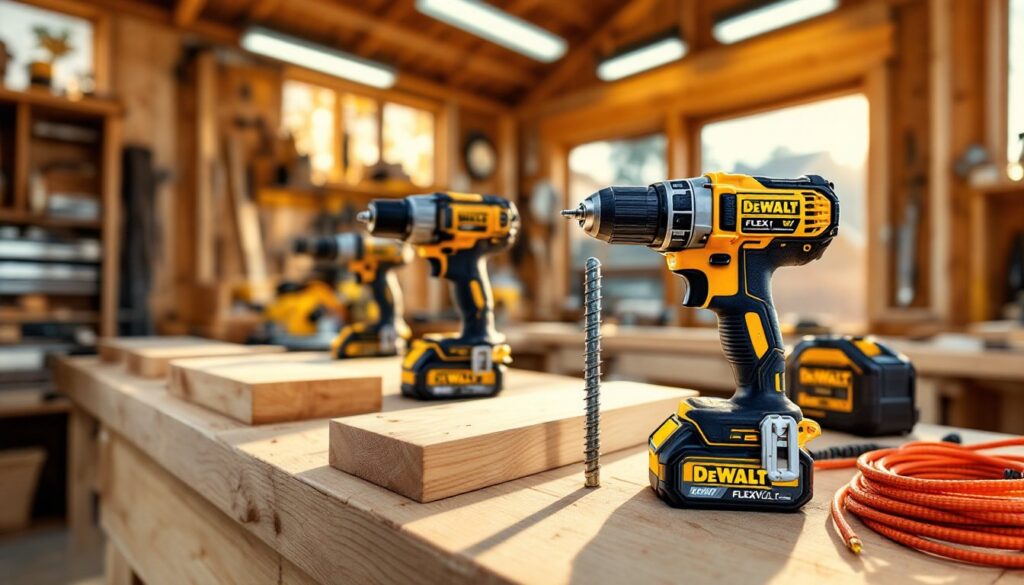
The FlexVolt drill/driver is the workhorse. In 20V mode, it’s nimble enough for hanging drywall anchors or assembling shelving. Switch to dual 54V batteries and it becomes a stud-busting fastener gun capable of driving 3/8″-diameter bolts through doubled-up joists. For rough framing, deck ledger attachment, or lag bolt installation, this tool eliminates the “should I rent a power auger?” debate.
The FlexVolt reciprocating saw earns its spot on every serious DIY bench. Dual batteries at 54V give it enough cutting speed and power to demo concrete fasteners, cut through metal studs, and saw through doubled-up 2x lumber without bog-down. Single battery mode makes it light enough for branch trimming or overhead cuts. This is the tool you use to cut out a window opening in an existing wall or demolish interior non-load-bearing walls before renovation.
The FlexVolt circular saw simplifies deck building and framing. At 54V, it rips 2x material, crosscuts 4x stock, and handles pressure-treated lumber without the hesitation of mid-range cordless saws. The no-load RPM stays high enough to produce clean rip cuts and crosscuts, and battery runtime on a single charge covers framing a 12-foot deck section or roughing out wall sheathing. Dual-battery operation is where this tool justifies its cost against a corded alternative.
The compound miter saw (if available in your market) deserves mention. Cordless miter saws historically struggled with crosscutting thick or dense materials, but the 54V FlexVolt version maintains cut quality through multiple angles on hardwood trim, composite boards, and cedar. For a homeowner finishing deck stairs or installing cased openings, it’s fast and portable.
Outdoor and Yard Tools
The FlexVolt chainsaw bridges cordless convenience with real cutting power. Single 20V battery runs it for light pruning: dual 54V batteries handle limbing, bucking firewood, and felling small trees up to 8 inches in diameter. It’s quieter than gas, requires no mixing of fuel, and starts instantly, genuine advantages if you’re working on a residential lot where noise matters.
The FlexVolt string trimmer and leaf blower excel in residential settings. Neither requires much voltage to deliver results, so 20V single-battery operation is usually sufficient, leaving your 54V dual-battery setup for heavier tools. But, a homeowner with several acres might appreciate dual-battery 54V trimmer operation for extended runtime without swaps.
The FlexVolt angle grinder is where 54V shines. Cutting rusty bolts, grinding welds on metal gates, or resurfacing concrete edges demands sustained speed without stall. A 54V grinder maintains RPM under load in ways lower-voltage models cannot, making it worth the upgrade if metal work appears in your project lineup.
Compatibility and Battery Considerations
All modern DeWalt 20V tools work with FlexVolt batteries in single-battery 20V mode. Older DeWalt tools (pre-2015 or DC-series) don’t recognize FlexVolt batteries, so verify your existing tool line before buying new packs. The newer XR (extra runtime) batteries are FlexVolt-compatible in single-battery configuration, making them excellent if you’re building a fleet gradually.
Chargers matter. A basic DeWalt 12V charger trickles FlexVolt packs slowly. A dedicated FlexVolt charger or an XR charger rated for higher amps returns packs to full charge in 30–60 minutes depending on capacity. For a homeowner running projects back-to-back, a dual-charger setup lets you swap exhausted packs while the charger revives the spent one.
Battery cost reflects the technology. A 5.0 Ah FlexVolt battery runs $60–$85 depending on promotions and retailer. That’s steeper than a comparable 20V XR battery, but the dual-voltage payoff justifies it over time. Budget $120–$170 for a pair if you’re committing to FlexVolt tools. Recent product reviews on CNET and Tom’s Guide compare cordless power systems across price points if you want independent testing data before purchasing.
Storage is straightforward. Keep batteries in a cool, dry location (garage, not attic). Drain them partially before long-term storage (80% charge is ideal). Check connectors for corrosion annually, especially if tools are used outdoors or in damp conditions. A simple woodworking tool maintenance guide walks through battery care and diagnostic troubleshooting if a pack seems sluggish.
One practical tip: if you own both FlexVolt and standard 20V DeWalt tools, buy at least two FlexVolt batteries. Single-battery swapping between a light drill and a power-hungry saw wastes time and creates charging bottlenecks. Two batteries ensure one is always charged while the other works.
Conclusion
DeWalt FlexVolt tools aren’t a fad, they’re a serious evolution in cordless power for homeowners. The voltage flexibility means you buy fewer tool models, maintain one battery ecosystem, and gain genuine power for demanding projects that would otherwise demand corded equipment or rental. Start with one FlexVolt tool and matching batteries, see how the system fits your workflow, and expand from there. Most DIYers find the investment pays dividends within the first season of projects.