Table of Contents
ToggleIf you’ve spent the last few springs wrestling with corded equipment or fueling up a gas mower, DeWalt yard tools might be the upgrade your property’s been waiting for. The brand has moved well beyond contractor-grade drills and saws, today’s DeWalt outdoor lineup rivals dedicated yard tool manufacturers in power, runtime, and reliability. Whether you’re tackling lawn maintenance, cutting back overgrown branches, or edging borders, DeWalt yard tools deliver consistent performance that homeowners and serious DIYers trust. This guide walks through what makes DeWalt stand out, which tools actually belong in your shed, and how to pick the right system for your yard without overspending or undershooting.
Key Takeaways
- DeWalt yard tools use interchangeable 20V and 60V battery platforms, eliminating the need to manage multiple power systems and reducing long-term costs.
- A 60V DeWalt chainsaw delivers 40–50 minutes of continuous runtime with two batteries, making it significantly more efficient than budget cordless models that fade after 20 minutes.
- Choose 20V DeWalt yard tools for smaller properties under 5,000 square feet and 60V models for larger lawns, thicker grass, and sustained cutting jobs like firewood.
- Investing in spare batteries early is essential—plan for at least two batteries so one charges while you use the other, keeping yard work flowing without downtime.
- DeWalt yard tools come with 3-year limited warranties and readily available replacement parts nationwide, ensuring durability and repair support that rival dedicated yard tool brands.
- Honest assessment of your actual yard work needs prevents overspending; if mowing is 80% of your work, prioritize a quality mower and basic trimmer over unnecessary tools.
Why DeWalt Dominates the Yard Tool Market
DeWalt’s strength isn’t hype, it’s ecosystem consistency. Their 20V and 60V battery platforms power everything from leaf blowers to chainsaws, so you buy batteries and chargers once, then swap them across tools. That cuts both cost and the clutter of managing mismatched power systems.
The brand also invests heavily in runtime and motor efficiency. A DeWalt 60V chainsaw with two batteries typically runs 40–50 minutes of continuous cutting, which handles most residential jobs without downtime for recharging. Compare that to some budget cordless models that fade after 20 minutes, and the value clicks. Tools are also designed with actual yard work in mind, rubberized handles that grip when wet, weather-sealed bearings, and guards positioned for real-world visibility.
Build quality matters too. DeWalt uses aluminum and reinforced plastic strategically, so you get durability without unnecessary weight. A homeowner who’s used the same DeWalt string trimmer for five seasons isn’t unusual. That longevity, paired with straightforward repair parts availability, explains why contractor crews and weekend DIYers both reach for the yellow and black.
Warranty and service support round it out. Most DeWalt yard tools come with 3-year limited warranties, and parts dealers stock replacements nationwide. If something breaks midseason, you’re not hunting eBay for obscure alternatives.
Essential DeWalt Yard Tools Every Homeowner Should Know
Cordless Mowers and Edgers
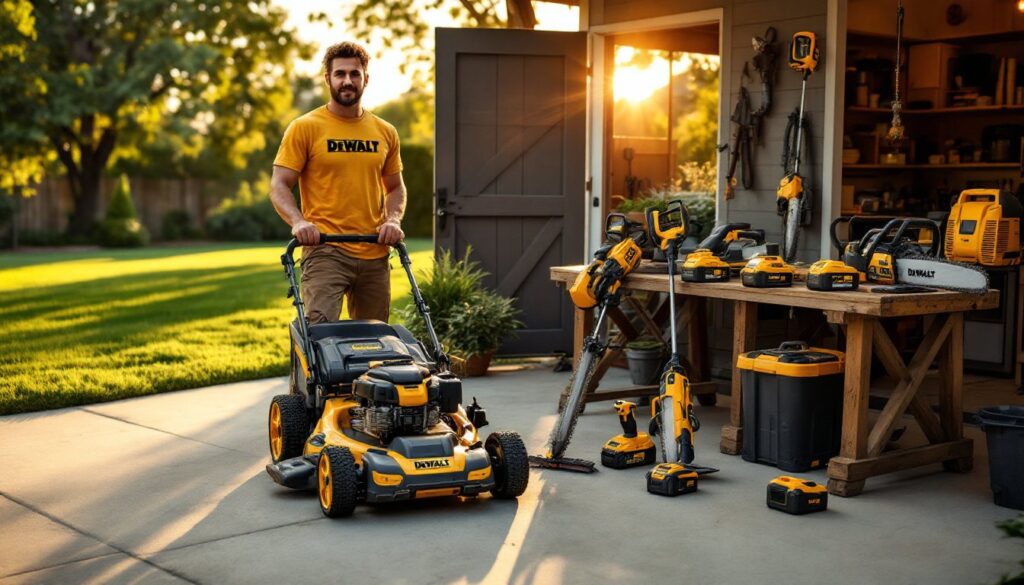
The DeWalt cordless lawn mower lineup starts at around 20V (lighter, compact) and scales to 60V (heavier-duty, faster cutting). A 20V model works fine for postage-stamp lawns under 5,000 square feet and edges: a 60V is better if your lawn runs larger or grass grows thick.
Mower width matters. Most DeWalt models range from 17 to 21 inches wide, a 21-inch deck cuts wider swaths per pass, saving time on larger properties. Deck material should be powder-coated steel or hard plastic: look for sealed vents that keep grass clippings from caking inside. Cutting height adjustment should span at least 1.5 to 3.5 inches, enough for seasonal tweaks (higher in summer drought, lower in spring growth).
DeWalt string trimmers and edgers deserve equal attention because a sharp lawn edge defines the whole look. String trimmer line cuts grass and light brush: an edger creates that clean border between lawn and bed. Many homeowners buy one of each, or a 2-in-1 head that swaps between roles. Battery runtime on 20V models averages 20–30 minutes per charge, which is fine for typical properties but plan a second battery if your yard exceeds an acre.
Chainsaws and Trimming Equipment
DeWalt cordless chainsaws come in 20V and 60V flavors. The 20V is lightweight (under 7 pounds) and ideal for light pruning, limb removal, and firewood on trees already on the ground. The 60V chainsaw with a 12- or 14-inch bar handles thicker wood and sustained cutting without bogging down. Motor power matters here, 60V models deliver around 6,000 RPM, giving a faster, cleaner cut than underpowered competitors.
Before buying, be honest about your needs. If you’re just clearing fallen branches and pruning tree limbs annually, a 20V model saves money and storage space. But if you cut firewood each fall or maintain dense hedgerows, the 60V pays for itself in efficiency. Resources like The Spruce have detailed guides on chainsaw sizing and safe operating technique if you’re new to the tool.
Pole saws and hedge trimmers round out the trimming arsenal. A pole saw extends your reach 10–15 feet, letting you prune high branches without a ladder. DeWalt’s pole saws use the same 20V or 60V platforms, so battery swapping stays seamless. Hedge trimmers typically run 20V and excel at keeping shrub lines neat.
Battery and Power Systems Explained
DeWalt’s 20V MAX and 60V MAX battery systems are the glue holding the ecosystem together. The 20V platform is the entry point, compact, affordable, and sufficient for lighter jobs like trimming and leaf blowing. A single 4.0 Ah battery (amp-hour rating indicates charge capacity) runs most 20V tools for 30–45 minutes depending on load. Two batteries and a charger costs roughly $100–150 and covers most residential needs.
The 60V MAX system is for heavier lifting. It pairs two 20V batteries in series to double voltage, delivering sustained power for chainsaws, mowers, and blowers over longer periods. A 60V 6.0 Ah battery easily powers a lawn mower for a full acre or more. Cost jumps higher, a 60V battery and charger run $200–300, but serious yard work justifies the investment.
Charger speed affects workflow. DeWalt’s standard charger takes 30–60 minutes per battery, plenty if you rotate two batteries. Fast chargers cut that to 15–30 minutes, worth buying if you’re running back-to-back projects. Always store batteries in a cool, dry spot (not a hot garage) to extend lifespan, heat degrades chemistry faster.
Battery degradation is real but gradual. After two years of regular use, expect 10–15% capacity loss. After five years, a battery might hold 70–80% of original charge. Replacing one battery costs $60–150 depending on size, much cheaper than buying all-new tools. The Spruce and other home sites cover battery maintenance in depth if you want granular details.
Choosing the Right DeWalt Tools for Your Projects
Start by auditing what you actually do outside. Lawn mowing weekly? Edge once a month? Occasional pruning and cleanup? Write it down. If mowing is 80% of the work, invest in a solid mower and basic trimmer: skip the chainsaw until you need it. That prevents dropping $500 on tools gathering dust.
Size and weight matter more than specs alone. A lightweight 20V trimmer feels effortless in your hand after 30 minutes: an overbuilt 60V model fatigues you needlessly. Heft a few options in person, feel the balance point, grip the handle, and imagine holding it for an hour. Many home centers have display units for testing.
Battery count is a hidden cost. One battery works for small lots: two batteries let you charge one while using the other, keeping projects flowing. A third battery rounds out a serious setup. Budget an extra $80–100 per battery, a worthwhile expense for convenience.
Also consider future needs. If you bought a 20V mower now but plan a bigger property expansion in two years, moving up to 60V means buying all-new tools. Starting with 60V and buying 20V tools for lighter tasks keeps your long-term flexibility higher. Projects like landscape design planning sometimes reveal tool needs you hadn’t anticipated, so think in phases.
Don’t overlook maintenance tools. A degreaser, brush set, and spare blades or trimmer line cost $30–50 but extend tool life significantly. Keep air vents clean, sharpen chainsaw teeth annually, and replace trimmer line when it frays. Warranty won’t cover wear items, so preventive care saves repair headaches later.
Conclusion
DeWalt yard tools deliver the reliability homeowners need without overcomplicating the toolbox. Start with the 20V or 60V platform that matches your property size, add a mower and trimmer, then expand as projects demand. Invest in spare batteries early, they’re the real workhorse of the system. With honest maintenance and realistic expectations about your yard’s needs, a DeWalt setup runs smoothly for years.