Table of Contents
ToggleYou picked up a Craftsman drill at the hardware store, and now you’re wondering what happens if it stops working six months from now. The tool feels solid, the price was fair, but the warranty details were buried in a pamphlet you might’ve tossed. Craftsman has built decades of reputation around reliability and customer support, but their warranty structure can be confusing if you don’t know where to look. This guide walks you through exactly what’s covered, how to register your tools, and how to handle a claim if things go sideways. Whether you’re a homeowner tackling a deck project or a hobbyist with a growing workshop, understanding your warranty protects your investment and saves you headaches down the road.
Key Takeaways
- Craftsman tools warranty coverage differs significantly: hand tools include lifetime limited warranty while power tools typically carry 3-year coverage, with batteries lasting 1-3 years.
- Register your Craftsman tools on their official website using the serial number and receipt to lock in warranty coverage, qualify for extended warranty upgrades, and receive safety recall notifications.
- Limited warranty excludes damage from drops, misuse, poor maintenance, and commercial use, so proper care and using tools as intended are essential to maintaining coverage.
- When filing a warranty claim, document the problem clearly, gather proof of purchase and registration details, and contact Craftsman customer service with your serial number and product model number ready.
- Avoid common warranty denials by preventing water damage to non-weatherproof tools, maintaining batteries in climate-controlled storage, regularly changing air filters on compressors, and never opening the tool yourself for unauthorized repairs.
Understanding Craftsman’s Warranty Coverage
Craftsman offers two main warranty tiers: lifetime coverage for hand tools and limited coverage for power tools and equipment. The distinction matters because your hammer, wrench set, or screwdrivers may be covered indefinitely, while your cordless drill or miter saw typically has a fixed coverage period.
Hand tools, think chisels, sockets, and ratchets, enjoy what Craftsman calls a “lifetime limited warranty.” This means if a hand tool fails under normal use and doesn’t show signs of abuse, Craftsman will repair or replace it at no cost for as long as you own it. It’s not truly “lifetime” in the sense that the company guarantees the tool forever: rather, Craftsman commits to standing behind the tool for your lifetime of ownership, assuming you’re using it as intended.
Power tools and larger equipment operate under different terms. Most cordless drills, impact drivers, table saws, and compressors carry a 3-year limited warranty. Some professional-grade Craftsman lines extend to 5 years. Batteries, but, often have shorter coverage, typically 1 to 3 years depending on the product line.
Lifetime vs. Limited Warranties Explained
The word “limited” might sound like bad news, but it’s standard in the industry. A limited warranty covers defects in materials and workmanship under normal use. What it excludes is critical: it won’t cover damage from drops, improper maintenance, use outside the tool’s intended purpose, or normal wear and tear.
Lifetime coverage is genuinely valuable for hand tools because wear and tear on a wrench or hammer is minimal if you’re not abusing it. A socket won’t degrade from sitting in your toolbox for decades. Power tools, by contrast, have motors, batteries, and moving parts that naturally age and degrade. That’s why manufacturers impose time limits.
Craftsman’s approach is straightforward: if your hand tool breaks, bring it back (or mail it in). If your power drill doesn’t charge within the coverage period and you didn’t drop it, Craftsman will handle it. The catch is you need to prove you owned it and have it handy if they want to inspect it.
What’s Actually Covered and What’s Not
Coverage boundaries exist for a reason, and Craftsman is relatively clear about them, though the fine print takes reading. Defects in materials and workmanship are the baseline. If a gear strip in your drill or a motor bearing fails prematurely, that’s covered. If your corded circular saw won’t start because the power switch is defective, that’s covered too.
What’s explicitly excluded: damage from misuse, accidents, lack of maintenance, alteration, or repair by an unauthorized party. If you drop your impact driver on concrete and the chuck cracks, that’s on you. If you never change the air filter on your air compressor and the motor overheats, that’s also on you. If you use a power tool for commercial purposes when it’s rated for homeowner use, the warranty is void.
Batteries deserve special mention because they’re a common source of confusion. Battery degradation is normal chemistry: Craftsman won’t replace a battery pack if it simply holds less charge after five years of use. But, if a battery fails to charge within a reasonable timeframe even though proper care, that can be a warranty issue depending on the warranty period and product line.
Shipping and labor are sometimes included, sometimes not. Craftsman typically covers the cost to repair or replace a defective tool, but shipping it to a service center may fall on you. Always check the warranty document for your specific product: it’ll specify whether the company covers return shipping or labor costs. The answer varies by region and product category. If you bought your tool from a retailer that still has a service department (fewer and fewer do), in-store warranty service may be available, another reason registration matters.
How to Register Your Tools for Warranty Protection
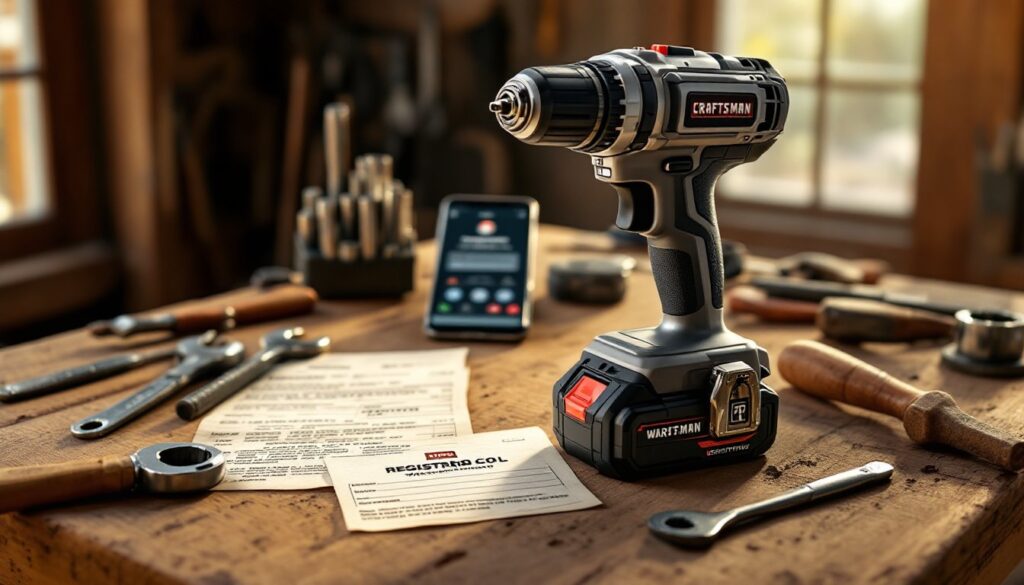
Registration isn’t always mandatory for basic warranty protection, but it’s strongly recommended and can extend your coverage. Here’s why: without proof of purchase, you may struggle to claim warranty service years later if the tool fails. A registration card or online account creates a paper trail.
The process is simple. When you buy a Craftsman tool, keep the original receipt. Visit Craftsman’s official website (typically accessed through their parent company Dorel Industries’ portal) and register the tool with the serial number, purchase date, and retailer information. Some retailers now offer in-store registration at checkout.
Registration serves multiple purposes. First, it locks in your warranty start date and ensures you’re covered even if you lose the original receipt (though a receipt is still ideal backup). Second, many products offer an extended warranty upgrade at the time of registration, sometimes adding years to your coverage for a modest fee. Third, Craftsman uses registration data to contact customers if a safety recall is issued for your specific tool model and serial number batch.
If you inherit a used Craftsman tool or buy one secondhand, registration history can get murky. Craftsman’s lifetime hand tool warranty typically transfers to the next owner, but power tool warranties may not, check the specific terms for the product line. Register it anyway with your purchase information if possible: at minimum, keep any documentation that shows when the original purchase occurred.
Filing a Warranty Claim: Step-by-Step Process
When a Craftsman tool stops working and you believe it’s a warranty issue, don’t panic, the claim process is manageable. Start by documenting the problem clearly. If your drill won’t charge, note the symptoms: does the charger light up? Does the battery feel warm? This information helps the warranty center diagnose the issue faster.
Next, gather your proof of purchase and registration information. A receipt is gold: a registration confirmation email is nearly as good. If you registered the tool, log into your Craftsman account and pull up the warranty details. You’ll need the serial number (usually stamped on the tool or printed on a label), the product model number, and your purchase date.
Contact Craftsman customer service. You can call, email, or use their online portal, check the warranty document for the current contact method, as these change. Explain the problem briefly and have your documentation ready. The representative will determine if the issue sounds like a warranty claim or user error. If it’s covered, they’ll provide instructions for sending the tool in (or sometimes direct you to a local service center if one exists).
Ship the tool carefully. Use the prepaid shipping label Craftsman provides, or ask if they’ll cover return shipping. Include a brief note inside the package describing the problem. Don’t send accessories you want back unless necessary for the diagnosis. Turnaround is typically 2-4 weeks, though it varies by the service center’s workload.
Once Craftsman inspects the tool, you’ll receive a report. If it’s covered, they repair or replace it at no cost and ship it back. If the damage is deemed user error or outside the warranty scope, they’ll contact you with repair cost estimates. You can then decide whether to pay for out-of-warranty service or accept the loss. This is rare with Craftsman, but it happens.
Common Warranty Issues and How to Avoid Them
Most warranty denials stem from preventable mistakes. The most common: user abuse that goes unrecognized as such. Dropping a power saw and cracking the housing might seem like an accident, but Craftsman considers it misuse. Similarly, using a homeowner-grade drill for hours on a construction job exposes parts to dust and heat they weren’t designed to handle. If the motor fails mid-project, the warranty won’t cover it because you exceeded the tool’s intended duty cycle.
Another frequent issue is poor maintenance. Air compressors need regular filter changes and tank drainage to prevent corrosion and bacterial growth inside the tank. Batteries need to be stored in a cool, dry place, leaving a cordless drill’s battery in a hot garage or a freezing shed degrades the cells prematurely. These aren’t manufacturing defects: they’re the result of neglect. Keep batteries in a climate-controlled space and clean the vents on power tools so they don’t overheat.
Water damage is another tricky zone. Using a power drill or circular saw in wet conditions voids the warranty on most consumer-grade tools. Craftsman sells weatherproof and jobsite-rated lines specifically for damp environments, so know what you’re buying before you take it to a rain-soaked deck project. A corded tool splashed accidentally usually survives, but submersion or prolonged moisture exposure is abuse.
Missing or damaged serial numbers can complicate claims. Always photograph your tool’s serial number and label when you first buy it, or store this info in your phone’s notes. If the label peels off or fades over years, you still have proof. Finally, unauthorized repairs are warranty killers. If a tool fails and you open it up to tinker, you’ve likely voided the warranty. Let Craftsman’s technicians handle it.
Conclusion
Craftsman’s warranty is a genuine safety net for serious DIYers, but it only works if you understand the terms upfront. Register your tools, keep receipts, maintain your equipment, and use tools as intended. When power tool brands are compared, warranty and after-sale support often distinguish the leaders. If something goes wrong, the claim process is straightforward. A little foresight now, registering, documenting, and reading the fine print, pays dividends when your favorite impact driver or table saw stops working years into ownership. Your warranty only helps if you’ve prepared for it.