Table of Contents
ToggleHikoki power tools have earned a solid reputation among DIY homeowners and professional contractors alike. Originally known as Hitachi Power Tools before rebranding to Hikoki, this Japanese manufacturer has been delivering reliable, efficient equipment for decades. If you’re planning a home improvement project, whether it’s framing a wall, cutting trim, or installing shelving, having the right tools makes all the difference. This guide breaks down what Hikoki offers, which tools work best for common projects, and how to keep your gear running strong for years to come.
Key Takeaways
- Hikoki power tools combine durability and user-friendly design, making them ideal for both DIY homeowners and professional contractors tackling everything from cabinet installation to full renovations.
- Cordless drills and impact drivers are essential workshop starters—impact drivers cut assembly time by roughly 40% compared to standard drills and pair perfectly within Hikoki’s shared battery ecosystem.
- Battery capacity and compatibility matter: invest in higher amp-hour ratings (5.0 Ah) for full-day projects, and choose tools from the same generation to share batteries across your toolkit.
- Circular saws and angle grinders require proper safety gear and maintenance—replace dull blades immediately and inspect angle grinder wheels for cracks to prevent overheating and dangerous failures.
- Extend the lifespan of Hikoki power tools by brushing dust from vents after each use, storing batteries at room temperature, keeping power cords loosely coiled, and storing equipment in a dry location to prevent rust.
- Start your workshop with a cordless drill and impact driver, then add specialized tools like circular saws based on your actual project needs rather than rushing to own every available tool.
What Are Hikoki Power Tools and Why They Matter
Hikoki power tools are engineered for durability and consistent performance. The company manufactures everything from cordless drills and impact drivers to circular saws, angle grinders, and reciprocating saws. What sets Hikoki apart is their focus on build quality and user ergonomics, tools are designed to handle both light homeowner use and heavy professional job sites.
For the DIYer, Hikoki’s cordless line using their proprietary battery platform delivers decent runtime and charging speed without unnecessary bulk. Their brushless motor technology runs quieter and cooler than older brush-style motors, which means less heat buildup on longer projects. Tools in the “blue” lineup (their consumer-grade line) hit a sweet spot between cost and capability, making them accessible for people building a first workshop. Professional-grade Hikoki tools (typically marked with different labeling) offer premium features like variable speed controls and reinforced housings, useful if you’re tackling bigger renovations or multiple projects per season.
Why does this matter? Having reliable tools saves frustration, reduces accidents from equipment failure, and lets you focus on the actual work rather than fighting your gear. Power Tools for Home Workshop: Unlock Your DIY Potential Today are the foundation of any serious DIY effort, and Hikoki delivers without very costly.
Top Hikoki Power Tools for Home Improvement Projects
Drills and Impact Drivers
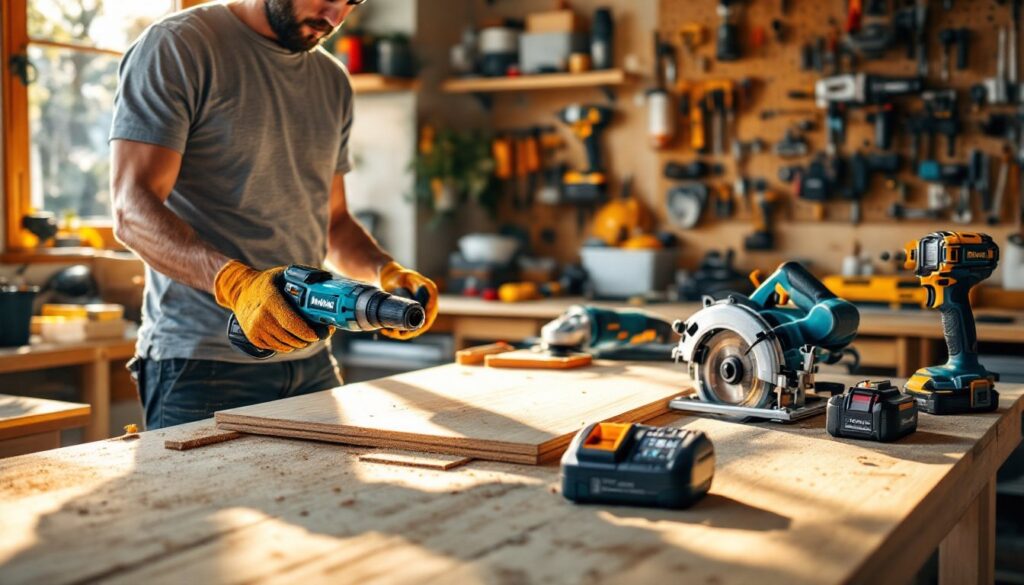
The cordless drill is the workhorse of any home workshop. Hikoki’s cordless drill-drivers come in 18V and 20V models, with the 18V being lighter and nimbler for overhead work (like installing cabinet hardware), while 20V offers more sustained torque for drilling into hardwoods or masonry. Look for models with a 1/2-inch chuck, variable speed trigger (typically 0–1,500 rpm), and a reversible motor so you can back out a stuck bit without resorting to pliers.
Impact drivers are the unsung hero of fastening. Unlike a regular drill, an impact driver delivers rotational bursts that help drive long screws through tough materials without binding. If you’re hanging drywall, deck building, or assembling framing, an impact driver cuts assembly time by roughly 40% compared to a standard drill. Hikoki’s cordless impact drivers pair well with their battery ecosystem, so one set of batteries powers both tools.
Battery runtime matters here. A 3.0 Ah (amp-hour) battery handles light work: jump to a 5.0 Ah if you’re working all day or tackling multiple projects in one weekend. Batteries cost $80–$150 each, so plan accordingly rather than discovering mid-project that you need a second set.
Circular Saws and Angle Grinders
Circular saws are essential for ripping boards and cutting sheet goods like plywood or OSB (oriented strand board). Hikoki’s wired and cordless circular saws typically have a 7¼-inch blade (standard for most home projects) and cutting depths up to 2½ inches. The right-side blade design gives better visibility when cutting from left to right, which suits most right-handed users. If you’re left-handed, Hikoki offers left-side blade models, a small detail that actually matters when you’re making dozens of cuts in a day.
Always wear impact-rated safety glasses and a dust mask when cutting. Circular saw dust contains fine particles that irritate lungs with prolonged exposure. Keep the saw’s dust blower pointed away from your face. For crosscuts (cutting across the width of a board), these woodworking project guides show how a miter saw delivers cleaner results, but a circular saw works fine if that’s what you have.
Angle grinders are the cleaning and cutting tools for metalwork, tile, and concrete. A 4½-inch grinder handles most home projects, cutting rebar, grinding down welds, smoothing concrete edges, or cutting ceramic tile. Wear safety glasses, a face shield, work gloves, and ear protection. Angle grinders kick back hard if the wheel binds, so never force it. Let the tool do the work and stay alert.
How to Choose the Right Hikoki Tool for Your Needs
Start by defining your project scope. Are you doing a one-off kitchen cabinet installation, or are you planning a full home renovation over the next year? One-off projects might justify renting or borrowing a specialized tool (like a nail gun or rotary hammer), but if you’re working steadily, building your own kit saves money in the long run.
Consider your physical capability. Heavier tools like large angle grinders or 1-inch impact drivers exhaust your arms faster. If you’re not accustomed to holding tools overhead for extended periods, test the weight before buying. Many hardware stores let you hold a display model: if not, ask a friend who owns similar gear whether the weight suits you.
Battery compatibility is often overlooked but critical. Hikoki’s newer tools use their multi-voltage battery platform, which means batteries are shared across different tools. If you buy a drill and an impact driver from the same generation, you own fewer batteries overall and can swap between projects. Older Hikoki tools used tool-specific batteries, so if you’re buying used equipment, verify battery compatibility before checkout.
Budget wisely. Must-Have Power Tools for Home Workshop don’t all need to be premium grade. A $120 cordless drill handles 90% of home jobs just fine. Splurge on tools you’ll use weekly (like a drill or circular saw): save money on occasional-use tools (like a reciprocating saw) unless you’re sure you’ll reach for it regularly. Also check whether Hikoki offers bundle kits that pair a drill and impact driver with a charger and two batteries for roughly the cost of buying separately.
Maintenance Tips to Extend Tool Lifespan
Proper maintenance transforms a good tool into a long-term investment. After each use, brush dust and debris from vents and the chuck. Dust buildup restricts cooling airflow and clogs the motor, particularly important for brushless motors, which run hotter than brush models. A soft-bristled brush or an old toothbrush works fine.
Batteries need love too. Store them at room temperature (not in a hot car or cold garage). Charge them fully after each project and run them dry occasionally to recalibrate the battery management system. Most modern Hikoki batteries have charge indicators on the pack: when the battery won’t hold a charge, it’s time for a replacement (typically after 500–1,000 charging cycles, or 3–5 years of regular use).
For corded tools, inspect the power cord before each use. A cut or frayed jacket is a shock hazard, stop using the tool and repair or replace the cord. Keep moisture away from electronics. If a tool gets wet (rain, spill, wet hands), let it air-dry completely before use. Never operate power tools in puddles or standing water.
Saws and angle grinders need blade maintenance. Replace dull or damaged blades immediately: a dull blade overheats and dulls faster. Circular saw blades last 20–50 hours depending on material (hardwood dulls them faster than softwood). Angle grinder wheels should spin freely with no visible cracks. A cracked wheel shatters under load and becomes a dangerous projectile, do not use it.
Store tools in a dry spot. A small dehumidifier in a garage workshop prevents rust on metal parts. Keep power cords loosely coiled (tight coils stress internal wires) and tools in a toolbox or wall-mounted rack rather than scattered on the workbench. These home maintenance checklists include seasonal tool care reminders that fit well into any DIY routine.
Conclusion
Hikoki power tools deliver solid value for homeowners ready to take on projects themselves. Start with a cordless drill and impact driver, add a circular saw once you’re comfortable with basic techniques, and build from there based on the work you actually do. Don’t rush to own every tool, focus on reliability and proper maintenance, and your equipment will serve you well through countless projects ahead.