Table of Contents
ToggleIf you’ve spent time in a serious DIYer’s workshop, you’ve probably noticed Milwaukee tools everywhere. That red and black color scheme has become synonymous with homeowners tackling everything from deck framing to cabinet inlays. Milwaukee tools have earned their reputation through durability, ergonomics, and genuine performance on demanding projects. This guide walks you through why Milwaukee stands out, which categories matter most for your workshop, and how to build a practical collection without blowing your budget. Whether you’re a weekend warrior or someone who treats home improvement as a lifestyle, understanding what Milwaukee offers helps you make smarter tool investments.
Key Takeaways
- Milwaukee tools stand out for DIYers through their consistent battery ecosystem (M18 and M12 platforms), ergonomic design, and lack of proprietary lock-in, allowing you to power multiple tools with the same batteries.
- Start your Milwaukee tools collection with an M18 drill driver and impact driver—these two essentials handle 80% of home fastening and boring tasks for $300–$450 total investment.
- Brushless motors and proper chuck quality are non-negotiable features in Milwaukee tools; hold models in-store to ensure comfort and weight balance before purchasing.
- Save on Milwaukee tools by buying starter kits, timing purchases with spring and Black Friday sales, considering refurbished models with full warranties, and renting specialty tools for one-time projects.
- Add task-specific tools like circular saws, miter saws, and multi-tools only when actual projects demand them—avoid buying fantasy tools and focus on tools you’ll genuinely use.
Why Milwaukee Tools Stand Out for Home DIYers
Milwaukee’s reputation in the home DIY space comes down to three factors: consistency, battery ecosystem, and honest tool design. Unlike some brands that chase trends, Milwaukee focuses on tools that solve real workshop problems.
First, the battery system matters more than DIYers often realize. Milwaukee’s M18 and M12 platforms let you power everything from impact drivers to circular saws off the same batteries. That ecosystem means you’re not buying separate batteries for each tool, a genuine money saver over time. The batteries also hold a charge well during the winter months and perform reliably in cold basements or outdoor projects.
Second, Milwaukee doesn’t over-engineer for aesthetics. The grip angles, weight distribution, and control feel utilitarian, not flashy. A Milwaukee drill driver sits comfortably in your hand during the 147th hole on a weekend, and the chuck doesn’t wobble after six months of use.
Third, Milwaukee tools accept third-party batteries from compatible systems, which adds flexibility. You’re not locked into proprietary ecosystem lock-in the way some brands operate. You can also find free tool promotions from major retailers that include Milwaukee power tools, making it easier to expand your collection without full retail cost.
Milwaukee’s Most Popular Tool Categories for Homeowners
Not every Milwaukee tool is essential for home improvement. Focusing on the categories that deliver real value keeps your collection focused and affordable.
Power Drills and Impact Drivers
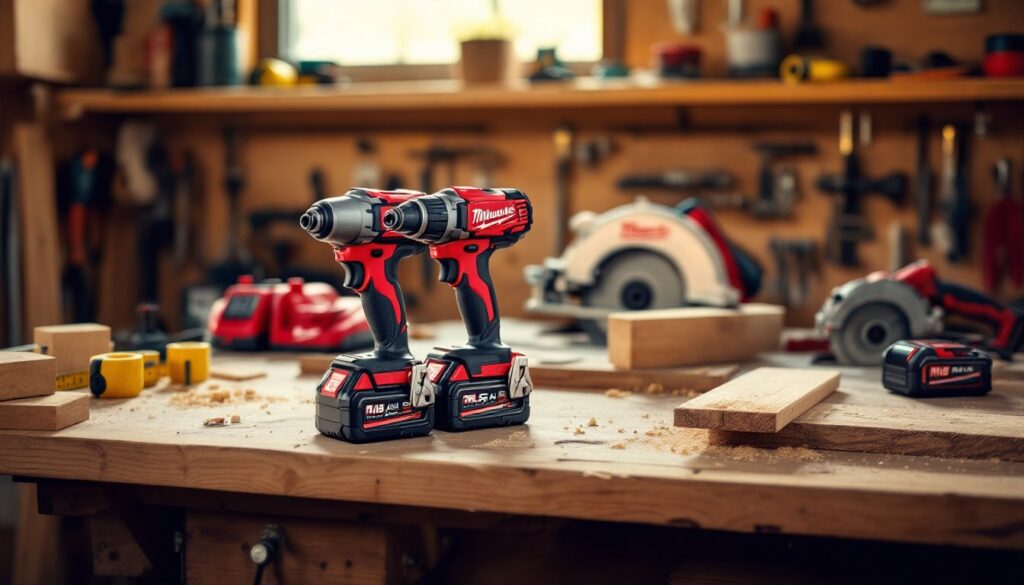
The M18 Compact Drill/Driver and M18 Fuel Impact Driver are the workhorses most homeowners reach for first. A drill driver handles fastening, hole boring, and light mixing tasks. An impact driver, distinct from a drill, uses rotational strikes to drive fasteners with less wrist strain and faster speed. If you’re hanging shelves, assembling furniture, or running deck screws, an impact driver cuts your fatigue in half compared to a standard drill.
For home use, the compact models weigh less and fit tight spaces better than full-size versions. You’ll notice the difference after an afternoon of overhead fastening. The batteries on these tools last through a typical weekend project, and swapping a fresh one takes five seconds.
Saws and Cutting Tools
The M18 Circular Saw handles framing, ripping lumber, and angle cuts on drywall. A circular saw works well for straight cuts and is more affordable than a miter saw, but a miter saw (Milwaukee makes solid ones) excels at trim work and crosscuts where precision and clean angles matter.
The difference is practical: a circular saw gives you flexibility and portability: a miter saw anchored to a stand delivers repeatability and cleaner kerfs on finish trim or cabinet components. Most homeowners benefit from starting with a circular saw, then adding a miter saw if trim work becomes frequent.
Milwaukee’s oscillating multi-tools and reciprocating saws fill niche roles, removing old grout, cutting hole saw access in drywall, demolition work. Don’t buy these first, but they’re invaluable once you hit specific project needs.
Essential Features to Look For in Milwaukee Tools
Not all Milwaukee tools are created equal, and knowing what features actually matter prevents overspending on unnecessary bells and whistles.
Battery voltage and capacity matter more than marketing claims. An M18 tool delivers enough power for most home projects. M12 tools are lighter but less powerful: they’re ideal for finishing work, assembly, or fastening where you don’t need brute force. Check the amp-hour (Ah) rating on batteries, a 5.0 Ah battery lasts longer than a 2.0 Ah during extended use, though it’s heavier.
Brushless motors are standard on modern Milwaukee tools and deliver better runtime and heat management than older brushed versions. If you see a brushed motor tool at a steep discount, it’s older stock and probably not worth the savings.
Ergonomic features include handle position, weight balance, and trigger feel. Visit a tool retailer and hold a few models. A tool that feels awkward in your hand gets used less, and muscle fatigue compounds over a project day. Milwaukee generally designs for comfort, but fit varies by hand size and preference.
Chuck quality on drills matters. A Milwaukee keyless chuck stays tight through hundreds of bit changes: a loose or wobbly chuck is frustrating and dangerous. The same applies to blade or bit retention on other tools.
Don’t chase the newest model unless your current tool is failing. Milwaukee releases incremental updates frequently, and last year’s model performs just fine for home projects. Retailers often discount older stock when new versions arrive, so patience pays off.
Building Your Milwaukee Tool Collection on a Budget
A practical Milwaukee collection starts small and grows based on actual project needs, not fantasy projects you might tackle someday.
Start with the essentials: an M18 drill driver and an M18 impact driver. These two tools handle 80% of home fastening and boring work. Add two 5.0 Ah batteries and a charger. Total investment runs $300–$450 depending on sales and bundling. That’s not cheap, but you’re buying years of daily-use durability.
Next, add task-specific tools as projects demand. If you’re building a deck, add a circular saw. If you’re installing trim, invest in a miter saw (this can be Milwaukee or another brand, the accuracy and quality matter more than the brand). If you’re renovating a kitchen, a multi-tool saves hours of precise cutting around cabinet cutouts and pipe penetrations.
Strategies to stretch your budget:
- Buy starter kits that bundle tools, batteries, and a charger. The per-item cost is lower than buying separately.
- Watch for seasonal sales. Spring and Black Friday bring legitimate discounts on cordless tools.
- Consider refurbished models from Milwaukee directly or authorized dealers. Refurbished tools come with full warranties and cost 20–30% less.
- Don’t duplicate what you already own. A homeowner rarely needs two impact drivers unless you’re working as a team.
- Borrow or rent specialty tools for one-off projects. A drywall sander or power planer gets used once every five years: renting makes sense.
- Retailers offering strategies for saving money on tool purchases provide additional tactics like subscribing to newsletters and timing purchases with contractor discounts.
Buy-it-for-life tools justify higher upfront cost. A Milwaukee drill driver will outlast three cheap alternatives, and the per-year cost becomes negligible after five years of use.
Conclusion
Milwaukee tools dominate DIY workshops because they’re built for people who actually use them, not collectors. Start with core tools, a drill and impact driver, and expand deliberately based on your projects. Quality tools reduce frustration, improve safety, and make the work enjoyable. The investment pays dividends across years of home improvement work. For detailed woodworking projects and workshop setup guidance, project resources and tool reviews offer additional direction as you refine your toolkit.