Table of Contents
ToggleEcho power tools have become a trusted name in outdoor equipment for homeowners tackling landscaping, yard maintenance, and property upkeep. Whether you’re clearing overgrown brush, trimming hedges, or maintaining a sprawling lawn, Echo’s lineup delivers dependable performance at a reasonable price point. These tools are engineered for durability and built to handle the demands of residential DIY projects without the professional-grade price tag. In this guide, we’ll walk through Echo’s key product categories, explain why homeowners choose these tools, and help you determine which equipment fits your workshop and outdoor needs.
Key Takeaways
- Echo power tools deliver reliable gasoline-powered performance for residential yard work at a reasonable price point, with sustained runtime that doesn’t require recharging between tasks.
- Echo chainsaws, trimmers, blowers, and lawn care equipment use two-stroke engines that share fuel mix compatibility across tools, streamlining maintenance and expanding your collection affordably.
- Homeowners choose Echo tools for their straightforward operation, accessible dealer network, and superior parts availability compared to many competing brands.
- Proper maintenance—including correct fuel mix preparation, seasonal drain-and-store practices, and regular air filter changes—is essential to maximize Echo tool durability and prevent costly carburetor repairs.
- Echo power tools offer a sweet spot between DIY-grade and professional equipment, making them ideal for homeowners who use outdoor equipment occasionally without needing commercial-grade durability or premium pricing.
What Are Echo Power Tools?
Echo is a manufacturer of outdoor power equipment headquartered in Lake Forest, Illinois, owned by Yamaha. The company specializes in small-engine equipment, primarily two-stroke and four-stroke engines, designed for homeowners and light commercial use. Echo tools are sold through authorized dealers and major retailers, making them accessible for backyard projects without requiring a commercial contractor’s account.
Unlike corded or battery-powered tools, Echo’s portfolio relies on gasoline engines, which deliver sustained power over extended runtime without recharging. This matters if you’re clearing a half-acre property or running a blower for an hour straight. The engines are relatively lightweight and fuel-efficient by gas-tool standards, and Echo’s service network is solid, replacement parts and repair support are widely available.
These aren’t luxury tools with flashy finishes. They’re straightforward, practical equipment built for the job at hand. If you need reliable yard work equipment that won’t quit halfway through a Saturday project, Echo tools occupy a sweet spot between DIY-grade and professional gear.
Key Product Categories and Features
Chainsaws and Cutting Tools
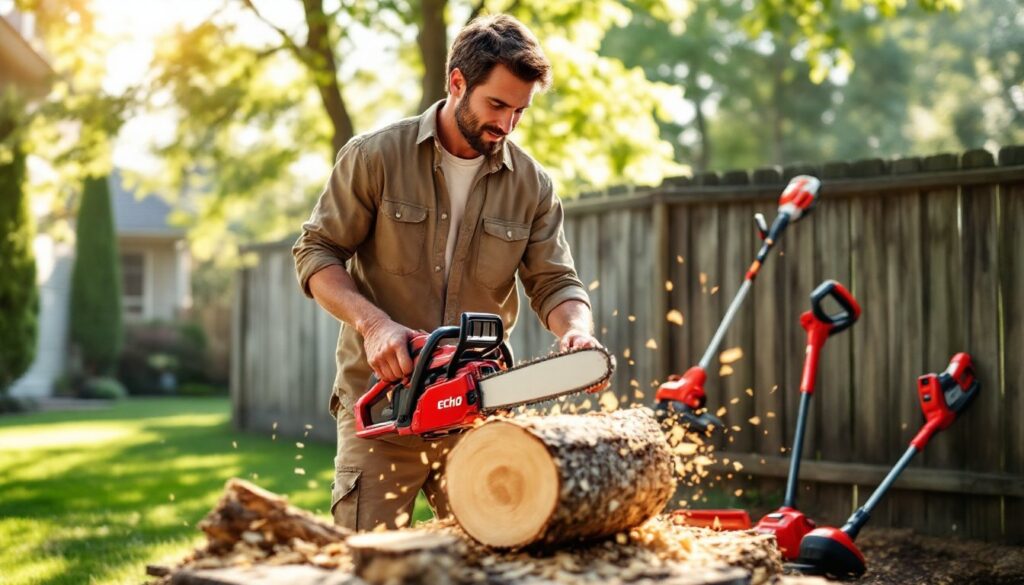
Echo chainsaws range from lightweight 16-inch bar models ideal for trimming branches and light bucking, up to 20-inch and larger units for serious wood-cutting tasks. Most homeowners find a 16- to 18-inch bar sufficient for storm cleanup, firewood prep, and general yard maintenance. Echo’s gasoline chainsaws use their own two-stroke engine platform, which means you can use the same fuel mix (typically a 50:1 gasoline-to-oil ratio) across multiple tools if you own a chainsaw and trimmer.
Key features to note: automatic chain oilers adjust lubrication based on cutting demand, reducing operator oversight. Anti-vibration systems dampen engine vibration, which matters during extended use. On first use, understand that two-stroke engines require premixed fuel, never use straight gasoline. Fill a can with the correct oil ratio before you start, or you’ll seize the engine.
Echo also makes pole saws, which are chainsaws on an extended shaft (typically 8 to 10 feet long). These are invaluable for pruning high branches without a ladder and are easier on the back and shoulders than reaching overhead with a hand saw or clambering up a ladder.
Trimmers, Blowers, and Lawn Care Equipment
String trimmers (also called weed eaters or weed whackers) are Echo’s volume sellers. They feature bump-head designs where you tap the head against the ground to feed more 0.080″ or 0.095″ nylon line. Shaft lengths vary: straight shafts suit tall users and thick brush, while curved shafts are lighter and better for general edging. Most homeowners are comfortable with a curved shaft for routine yard work.
Handheld blowers range from 150 to 250+ mph air velocity. A 150 mph blower handles dry leaves and clippings on small lots. If you have gutters, decks, or gravel drives to clear, bump up to 200+ mph. Backpack blowers distribute weight across your shoulders, reducing hand and arm fatigue during longer jobs, worth considering if you’re clearing a large property weekly.
Hedge trimmers come in 20-22 inch blade lengths and have dual-action blades that cut on both strokes, doubling your cutting passes. Cultivators (small tillers) have rotating tines that break up soil, useful for aerating vegetable beds or preparing ground for seeding. These are not heavy-duty professional implements, but they handle routine residential tasks.
Why Homeowners Choose Echo Tools
Reliability and availability drive the Echo decision. When a tool breaks, replacement parts are easy to source. You can walk into a dealer or order online and have a carburetor kit, spark plug, or air filter within days. This is a practical advantage: a broken tool sitting in the garage is worthless. Power Tools for Home covers how the right equipment streamlines projects, and Echo’s dealer network ensures your tools stay in the fight.
Price-to-performance ratio matters. Echo equipment typically costs less than Stihl or Husqvarna equivalents while delivering comparable performance for residential duty. You’re paying for a tool that works, not a brand premium. A homeowner who uses a chainsaw four or five times a year doesn’t need professional-grade equipment, and Echo recognizes that.
Ease of use appeals to DIYers unfamiliar with small engines. Starting procedures are straightforward, most models have a choke setting clearly marked “cold” and “warm,” and once you’ve started a tool correctly once, the muscle memory sticks. Echo’s instruction manuals are readable and thorough, which isn’t universal in this category. Must-Have Power Tools for emphasizes how selecting the right power tool accelerates DIY work, and Echo’s straightforward controls reduce the learning curve.
The ecosystem approach matters too. If you own an Echo chainsaw and buy an Echo trimmer later, you can share fuel mix preparation, many parts, and operational knowledge between tools. This makes growing your tool collection less overwhelming, each new tool feels familiar.
Durability and Performance for DIY Projects
Echo tools are built to last if maintained properly. The two-stroke engines are simpler than four-stroke designs, fewer moving parts mean fewer things break. But, they demand consistent fuel mix and regular air filter changes. Neglect carburetor cleaning during seasonal storage, and you’ll face a stubborn starting problem next spring.
Real durability comes from user discipline: drain fuel before winter storage, run the engine until it stops (burning remaining fuel from the carburetor), and store tools in a dry location. A $200 chainsaw left with old fuel in the tank for eight months will cost $80-$120 in carburetor service. The tool itself is reliable: operator maintenance is the dependency.
Performance scales with engine size and displacement. A 38-40 cc chainsaw (cubic centimeters of engine displacement) cuts through 8-inch diameter wood steadily. Go below 30 cc and you’re pushing a lightweight saw through hardwood, possible, but slower and more fatiguing. Home Workshop Essential Tools: discusses foundational equipment selection, and recognizing engine displacement helps you choose the right size for your projects.
Noise and emissions are reasonable for gas tools. A running chainsaw or blower will still be loud, wear hearing protection (earmuffs or plugs rated NRR 25 or higher), but Echo’s design keeps noise to industry standards. Gas two-stroke engines emit more emissions than battery tools, which matters if you’re sensitive to fumes or live in a tight suburban area. But, for occasional weekend use, most homeowners find the trade-off acceptable for the power and runtime.
Independent reviews confirm Echo’s durability. Best Echo Tools of 2024 evaluates Echo’s lineup and notes strong reliability across the product range. Echo Power Tools Review from This Old House emphasizes how Echo’s equipment holds up to repeated residential use. Essential Home Workshop Tools reinforces that durable tools are foundational to any workshop, and Echo delivers in that category.
Conclusion
Echo power tools offer homeowners a practical entry point into reliable outdoor equipment. They’re straightforward to operate, backed by an accessible dealer network, and priced fairly for residential use. Whether you’re managing a small suburban lot or tackling periodic maintenance on a larger property, Echo’s chainsaw, trimmer, blower, and specialty equipment lineup has a tool that fits the job. Invest in proper maintenance, fuel prep, air filter changes, and seasonal storage, and these tools will perform for years. For most DIYers, that’s exactly what you need.